Beyond the Hype: Practical Innovation with Bleeding-Edge Technologies & Platforms
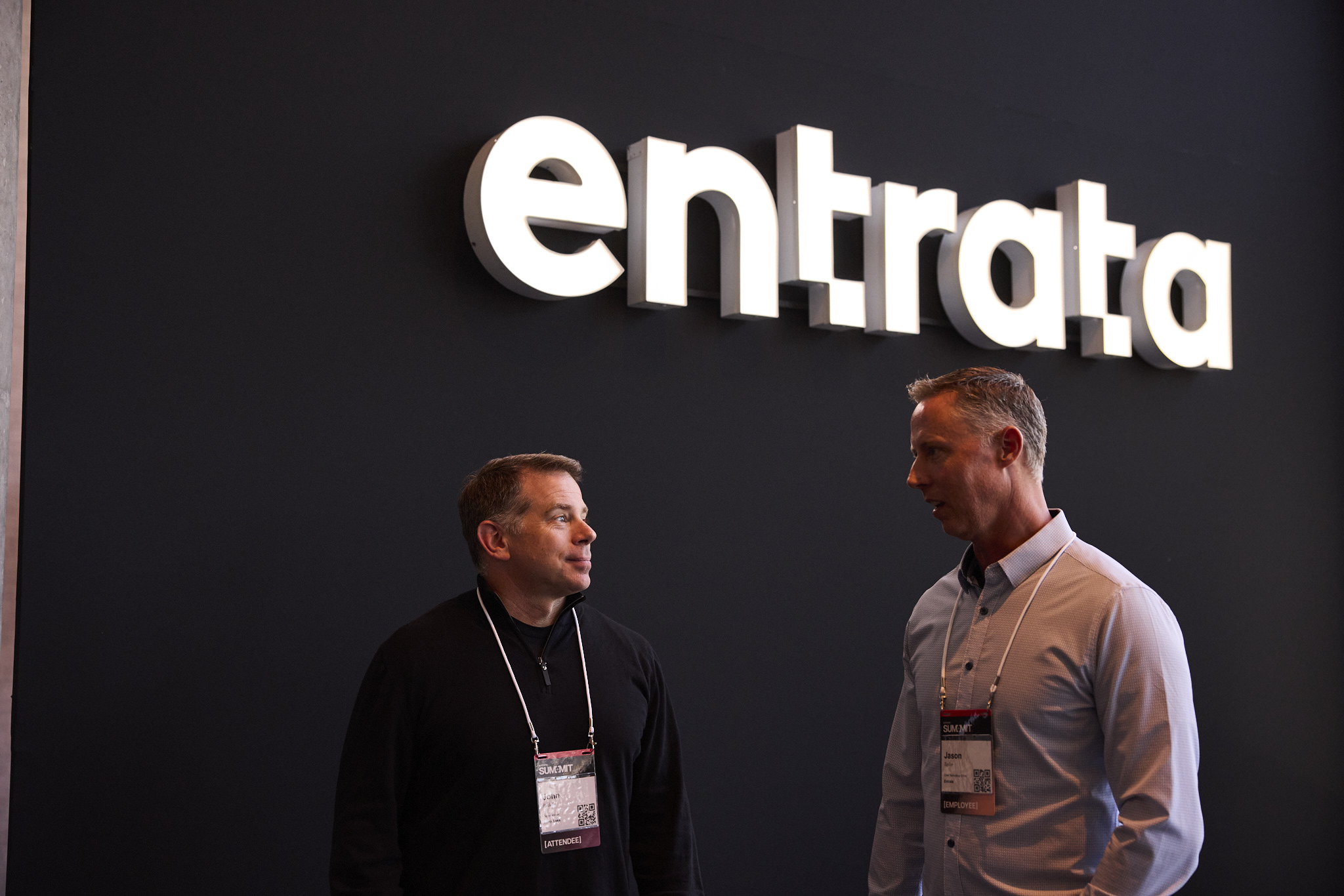
Multifamily operators are implementing powerful, transformative new technologies at a pace that has rarely, if ever, been seen before in the industry. And while the desire to push a company forward is praiseworthy, operators need to make sure they’re introducing new solutions in a thoughtful and strategic way.
How to build a culture and decision-making process that leads to the successful deployment of new technologies was the subject of the Beyond the Hype: Practical Innovation with Bleeding-Edge Technologies & Platforms session at the 2025 Entrata Summit. During the session, Adam Byrley, Chief Operating Officer at The Preiss Company, and Whitney Kidd, Senior Vice President of Innovation and Technology at the firm, outlined how the company has implemented forward-thinking technology while protecting the resident and employee experience and ensuring a healthy ROI.
Preiss, which is one of the largest providers of off-campus student housing in the U.S., has made innovation a fundamental part of its culture, both panelists emphasized.
To push the company ahead, Kidd and her team closely monitor technological trends in other industries. “We go to external conferences like CES,” she said. “We look at publications outside of multifamily. We look at other industries like industrial to see how they’re implementing these new technologies.”
Kidd noted that she takes a somewhat aggressive and proactive approach when it comes to putting emerging technologies on the company’s radar. “I always say, ‘early and often,’’’ she said. “If you’re trying to push a new technology forward within your organization, talk to leadership and your teams about it early and often. Start to get them comfortable and be ok if they say, ‘not yet.’”
Before too long, however, those pushing for a new solution need to be ready to detail its practical and financial benefits, Kidd added. “I see many young leaders who will come to their leadership with, ‘Hey, I’d like to implement this brand new technology. It looks cool. Everybody's using it,’” she said. “If you’re bringing something to your leadership early and often, it can start conceptual, but once you start to get deeper into the cycle, the business case has to follow.”
Byrley said his role is, in part, to carefully consider a new technology’s potential impact on residents, associates and the bottom line. “When I hear the word ‘innovation,’ I don’t just think about shiny, new technology,” he said. “I think about anything that makes us more reliable, more efficient and more effective in serving our residents, our partners, our communities. I see the COO as somebody who has their hand on the accelerator and the brake at the same exact time.”
When asked about his technology deal-breaker, Byrley was quick with his response. “I draw the line at it has to protect the resident and the employee experience,” he said. “If that is going to be an issue, you have to draw the line. That means experimentation is welcome, certainly, but it has to be thoughtful.”
Kidd echoed those thoughts. “As much as I want to be all gas and accelerate the technology in the process, it’s still important to me to make sure we’re serving our customer,” she said.
At the same time, operators have to realize that there will be bumps in almost any implementation, the panelists said. For example, it’s inevitable that some associates will be resistant to changes, Kidd noted.
“I saw a post from a prominent leader the other day that said innovation just has to be easy,” she said. “And I completely disagree because if you are doing things that are new and disruptive, it’s going to be challenging. Not everyone is going to jump on board on day one. One of my favorite tasks is taking those people and giving them the special attention they need so that we can bring them up into the cycle, which is so important.”
Byrley also urged operators to not hesitate to pull the plug when a technology is causing too many problems. “Don’t be afraid to say, ‘Hey, this isn’t working the way we want it to. We need to pull back,’” he said. “Nobody’s going to look down on you or think less of you as a leader if you pull back. They’re going to think less of you as a leader if you try to push something that’s clearly not working.”
Interested in seeing what Entrata can do for you?
See how Entrata can transform your operations.