All In on Entrata Utilities: Industry Insights and Real Operator Stories
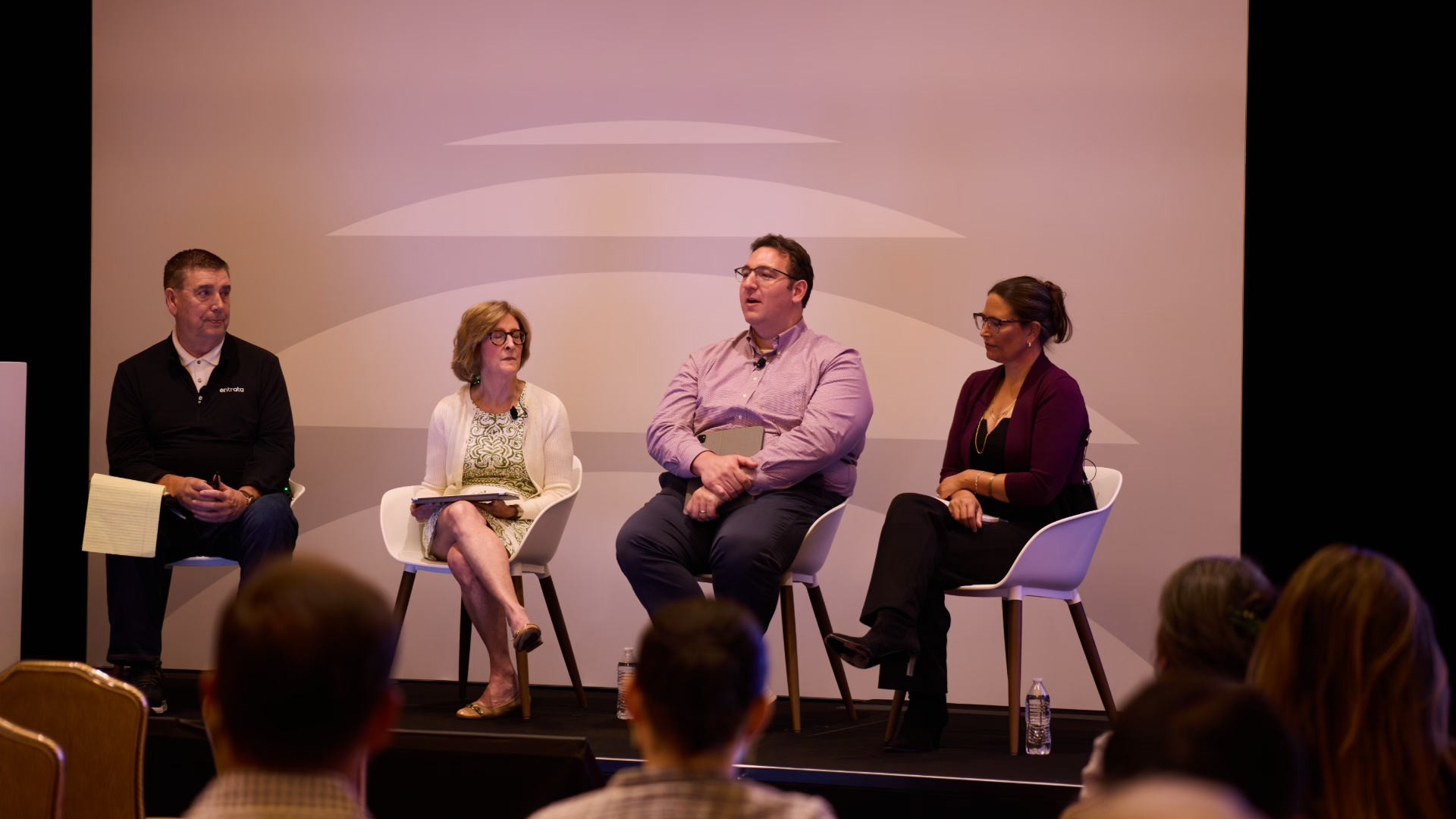
Utility bills can touch account access, invoice review, resident charges, compliance, and the data operators need to understand building performance. At a panel at Entrata® Summit in September, operators and sustainability experts shared how those issues play out across a portfolio—and what changed when they took a different approach.
Gerry Crooks, Sr. Industry Principal for Utilities at Entrata, moderated the discussion with Josh Kulick, Head of Technology and Innovation at IRT; Alice Barrett, SVP at Paradigm Property Management; and Keely Felton, Chief Sustainability Officer at Nova Group, GBC.
When the process stops working
Barrett described a utility invoice process that had changed little in 30 years. Paper bills gave way to online accounts, but property teams still had to find invoices, keep payments on time, and catch cases where residents had not transferred utilities into their names. The result could be late payments, service disconnections, or months of utility charges that had not been billed back to residents.
IRT had used a third-party provider, but Kulick said invoices went unprocessed, some were not the company’s, and placeholder invoices made oversight harder. When IRT looked at changing providers, it also discovered utility accounts that were not registered to the company or had outdated contacts. The transition required more account cleanup and expertise than the team had expected.
Both operators described a more streamlined process after moving to Entrata Utilities. Paradigm’s invoices are entered and reviewed by the utilities team, then checked by property staff before payment. The shift also changed resident billing: where Paradigm previously relied on a separate company to send water and sewer bills, residents at those communities can now see rent and utility charges together.
For IRT, visibility in the resident portal helped staff answer utility questions in the moment. The team also worked with Entrata to set up alerts for evictions and skips, when a unit’s utilities might otherwise be shut off before staff could prepare it for the next resident.
Compliance and sustainability depend on good data
The discussion also turned to resident billing requirements and building performance standards. Barrett said Paradigm reviewed its utility addendums with counsel in each jurisdiction and adjusted its approach to administrative fees, including removing them from water and sewer billing in Washington, D.C. Her experience underscored why operators need to review local requirements with their own counsel.
Felton described building performance standards as a growing concern for owners. Cities and states set different energy or emissions targets, reporting requirements, deadlines, and penalties. Preparing takes time: operators need to know which properties are covered, confirm that building details and utility data are accurate, and budget for any work needed to meet a standard.
One example from the discussion showed how utility data can help pinpoint an operational issue. In a New York City property audit, water use was reported at 159 gallons per bedroom per day. Felton said that level warranted a closer look for a possible leak or other unexplained usage. Better data can help operators move from a portfolio-wide concern to the specific units that need inspection.
The panel’s examples connected everyday utility work to broader goals: paying invoices accurately, giving residents a clearer view of charges, avoiding service interruptions, and understanding a building’s resource use. A reliable process can make those responsibilities easier to manage and give operators better information for the decisions ahead.
This recap reflects an Entrata Summit discussion and is not legal advice.
Interested in seeing what Entrata can do for you?
See how Entrata can transform your operations.